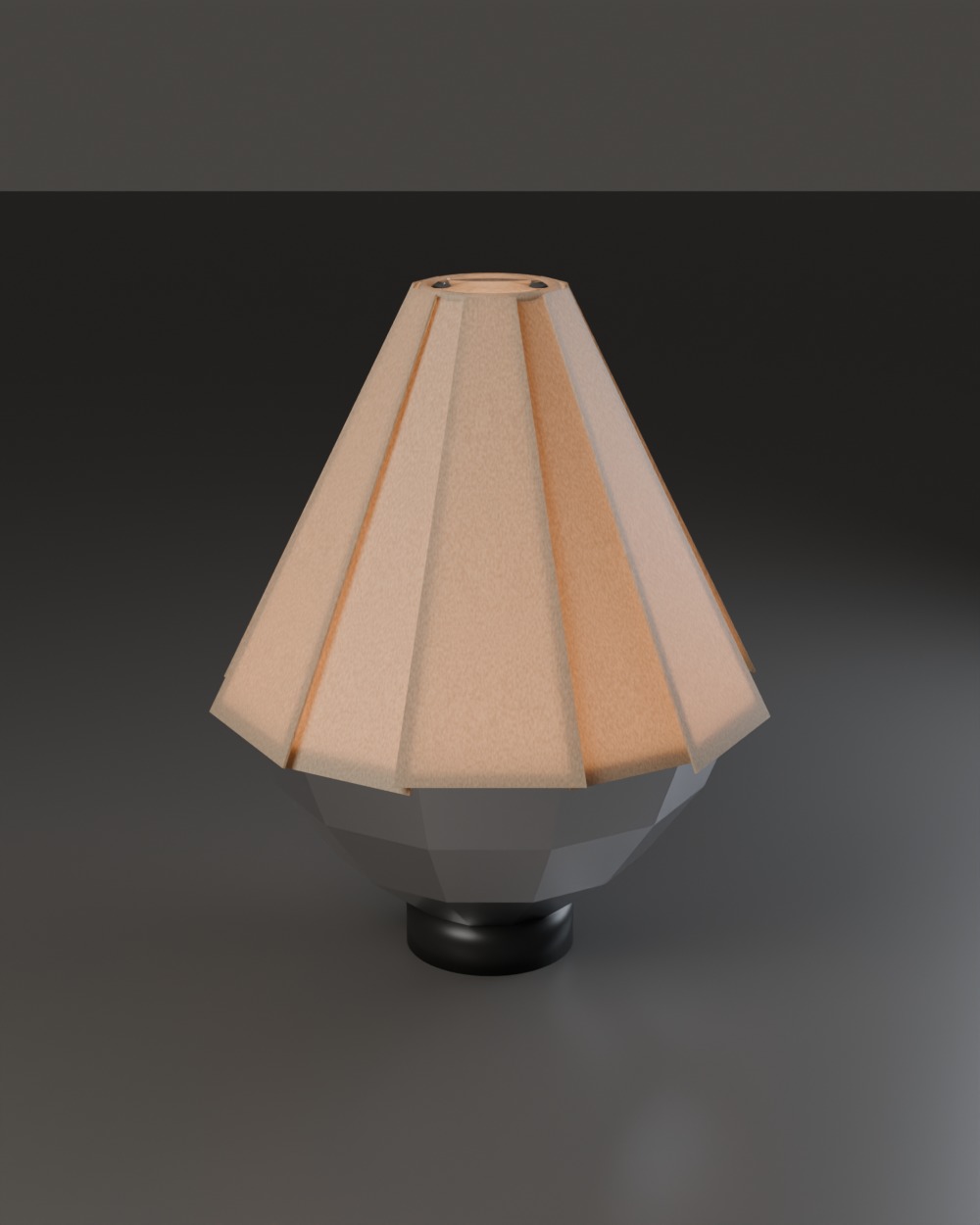
A lamp that throws a beam
A small study in controlling light with two cheap parts. A paraboloid bowl lined with kitchen foil collects the light. A single lens at the top focuses it further into a tight beam.
- Type
- Light study, prototype to final design
- Materials
- Laser cut plywood, foil, wood veneer, lens
- Year
- 2025
The question
A bare bulb sends light everywhere at once. Most lamps accept that and soften it. I wanted to do the opposite and see how much of that scattered light could be gathered and pointed in one direction using only shape.
How it works
- ASourceA small button lamp sits low in the bowl, at the focus of the curve.
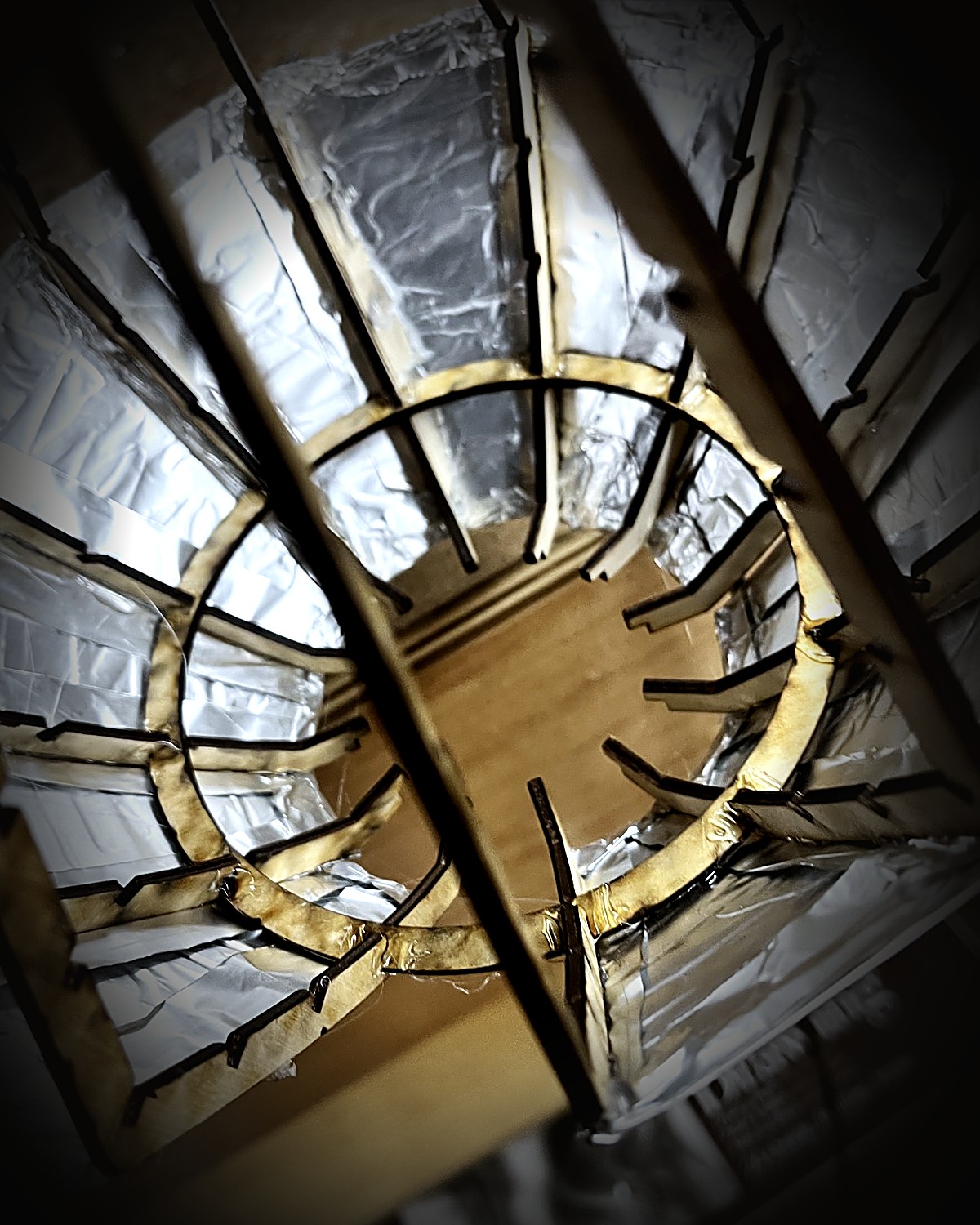
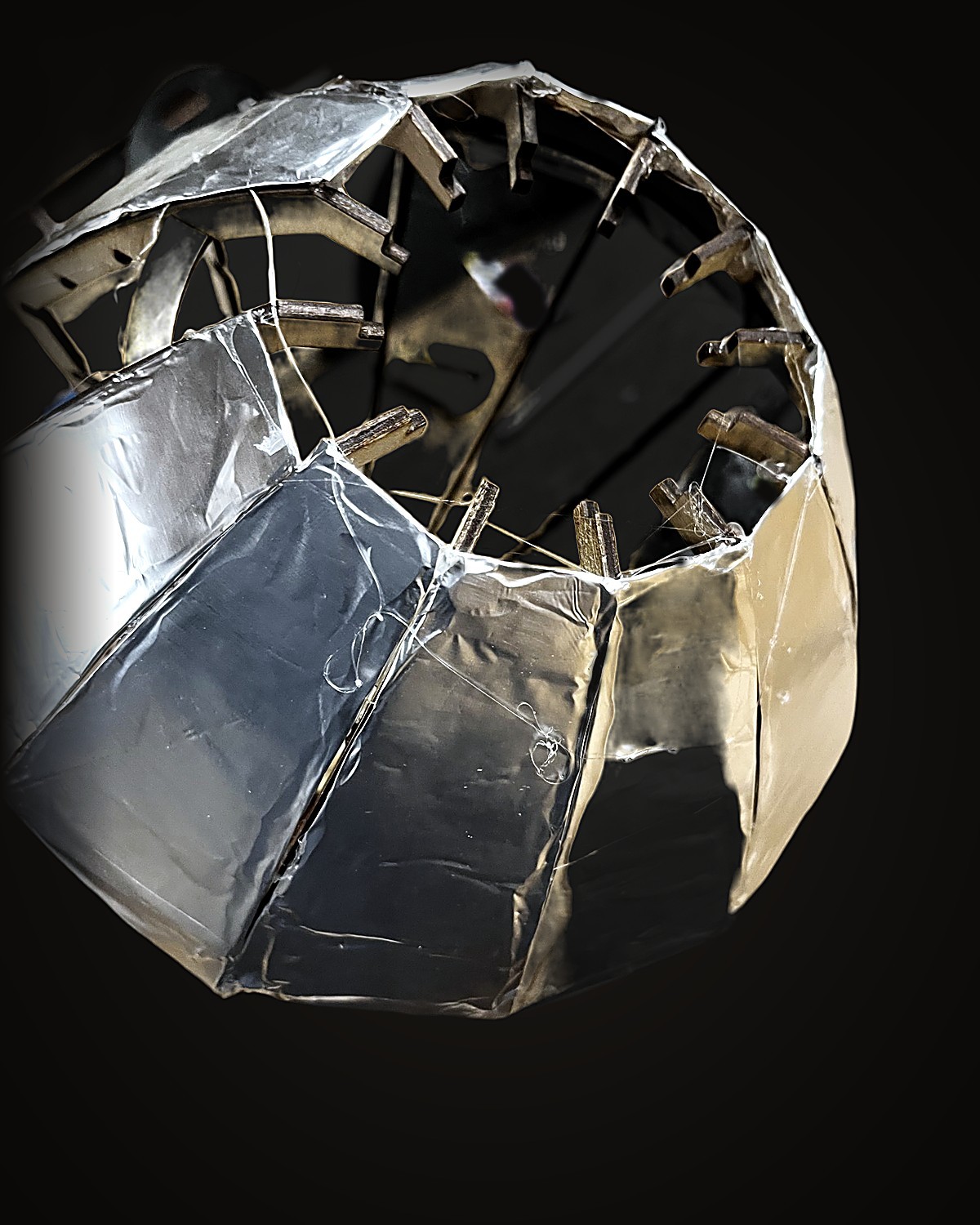
- BFoil paraboloidLight that would spill sideways hits the foil and leaves straight up, parallel to the axis. Flat panels stand in for the true curve.
- CVeneer shadeOverlapping strips of veneer narrow toward the top. They hold the lens and glow with the stray light that misses it.
- DLensThe straight rays pass through a single lens that pulls them together. The beam leaves tighter and brighter than the reflector alone could make it.
Proving it with a prototype
Before designing the final lamp I built a quick proof of concept to check that the optics work. A paraboloid is hard to make by hand, so I broke it into laser cut plywood ribs that carry the parabola in profile and slot into ring formers. Foil panels span rib to rib, so the reflector becomes a faceted version of the ideal surface.
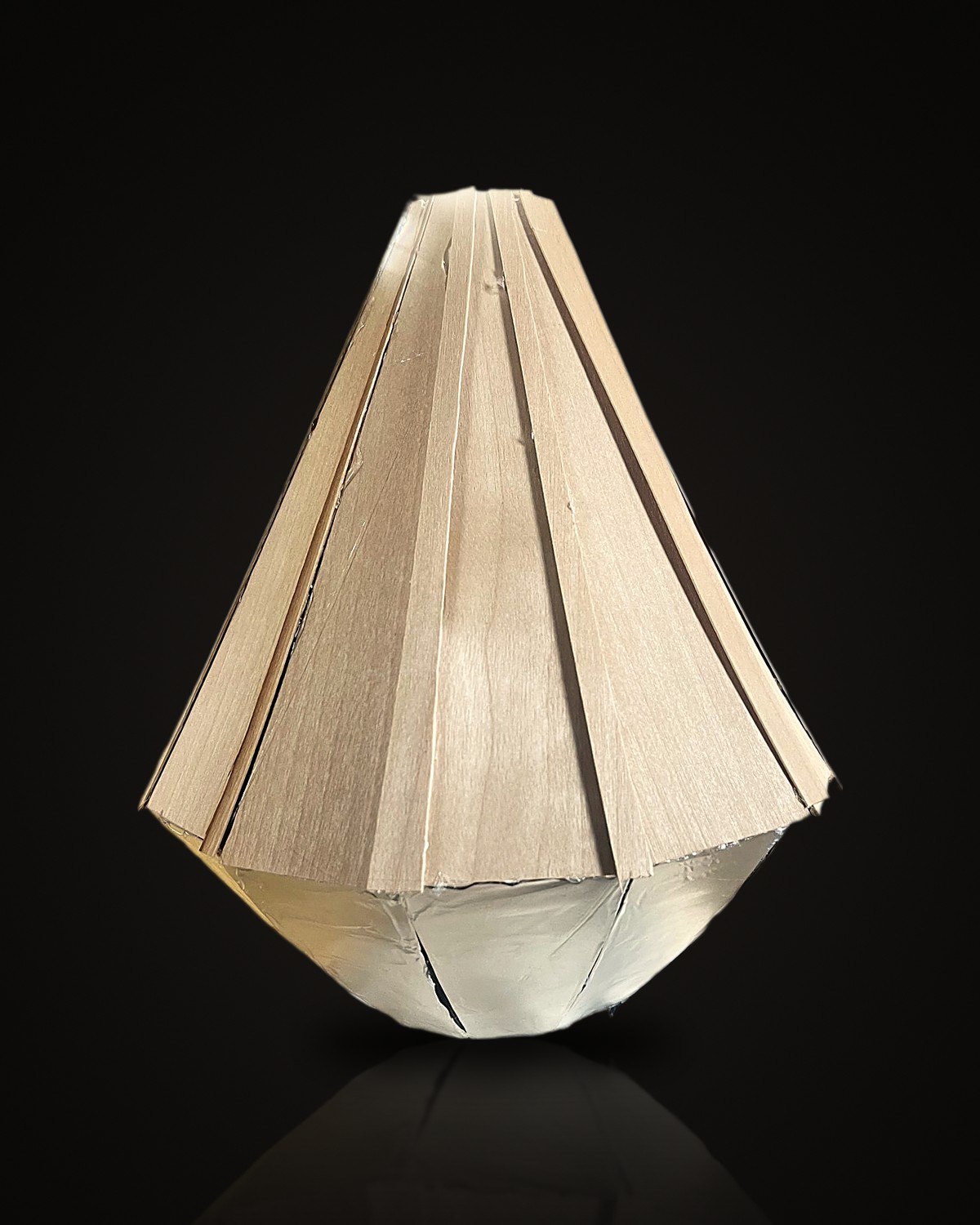
The prototype works
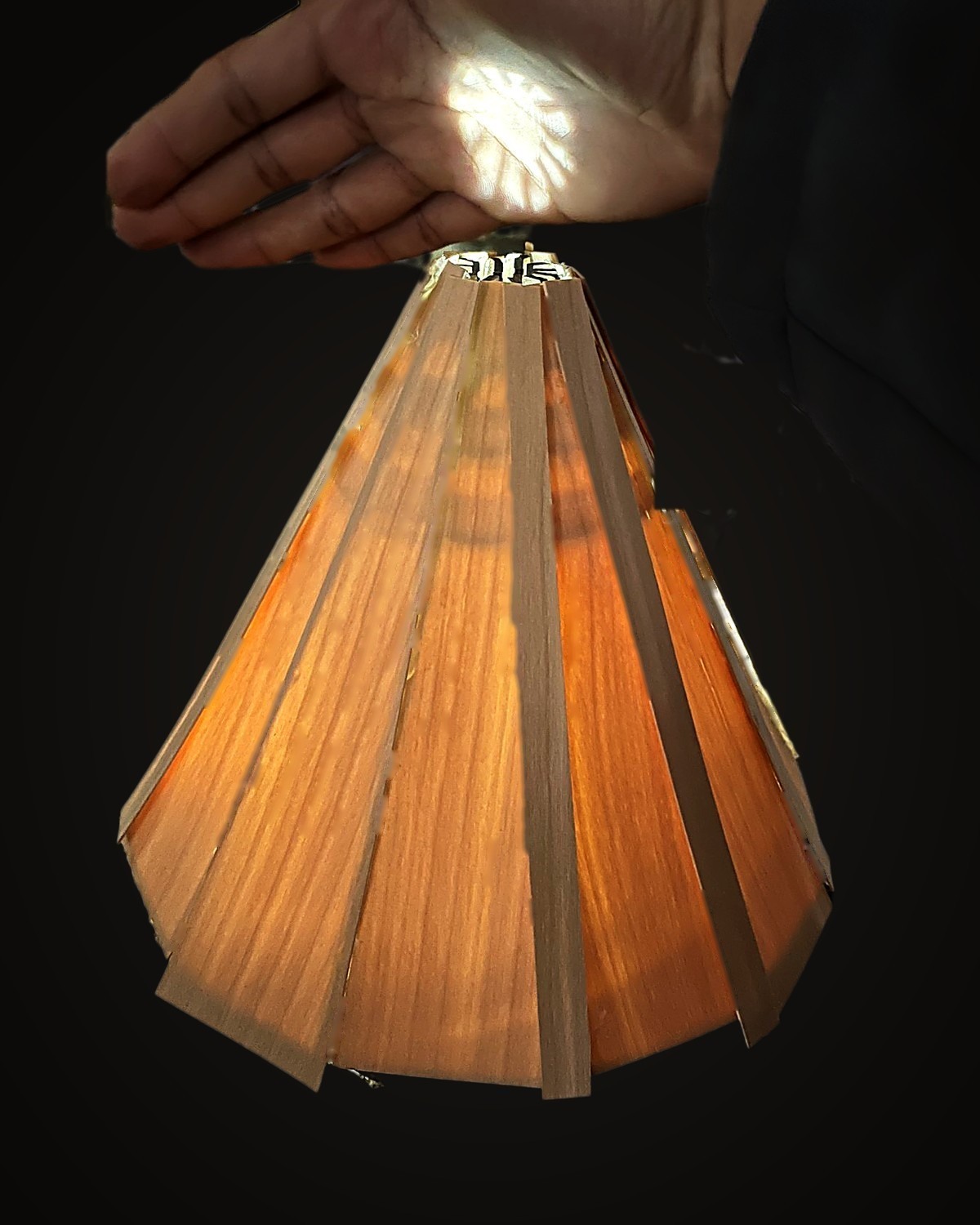
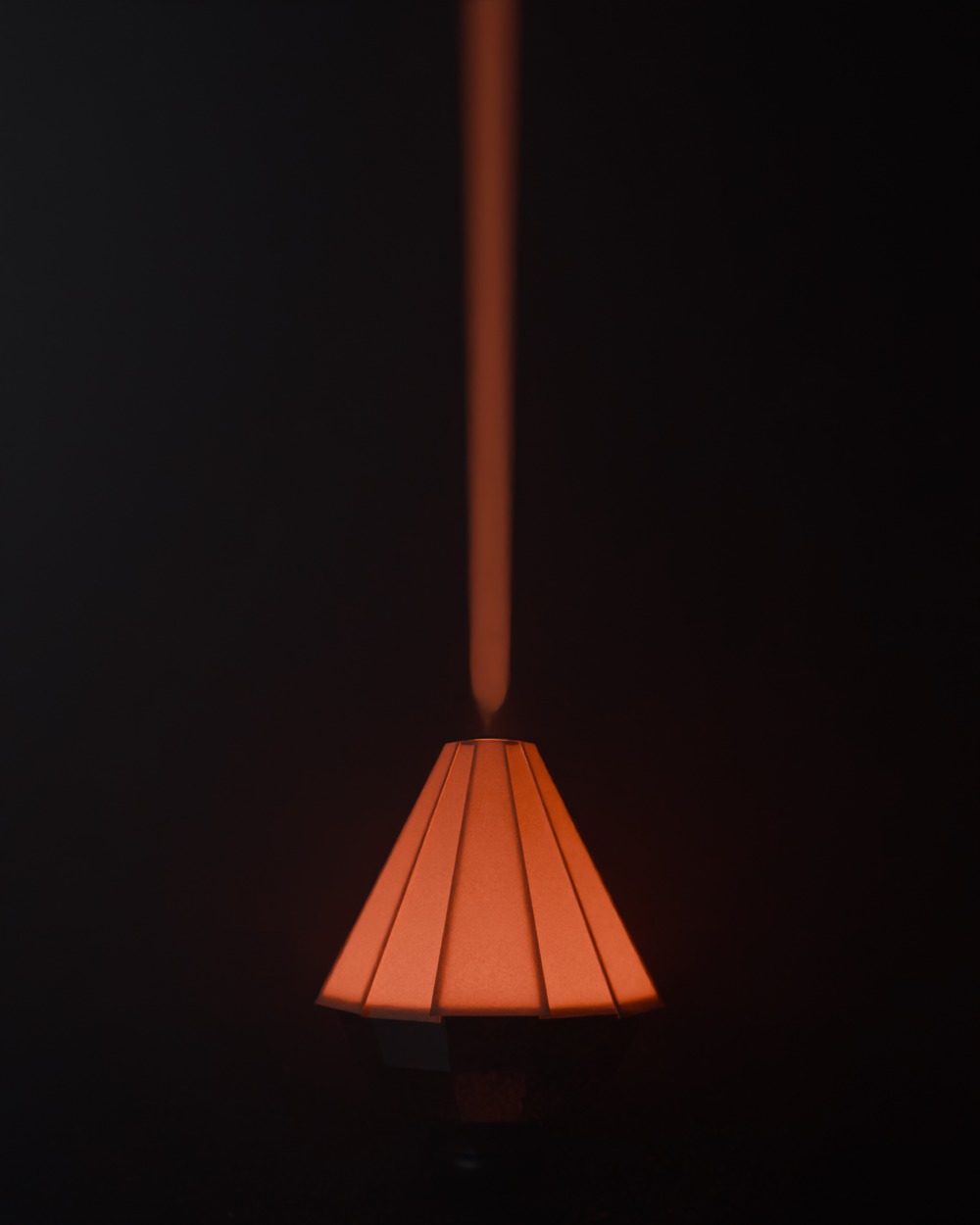
The prototype gives two kinds of light at once. A warm glow through the veneer, and a hard beam out of the top.
Held above the lens, a palm catches a small bright spot that carries the pattern of the ribs inside. In a dark room the beam reads as a solid column rising from the lamp.
The final design
With the optics proven, the final design keeps the geometry of the prototype and refines everything around it. Twelve clean foil facets make the bowl, overlapping veneer strips make the shade, and a single lens sits at the top. It is shown here as a render.