Product design · Mechanism
Adjustable Pivot Scissors
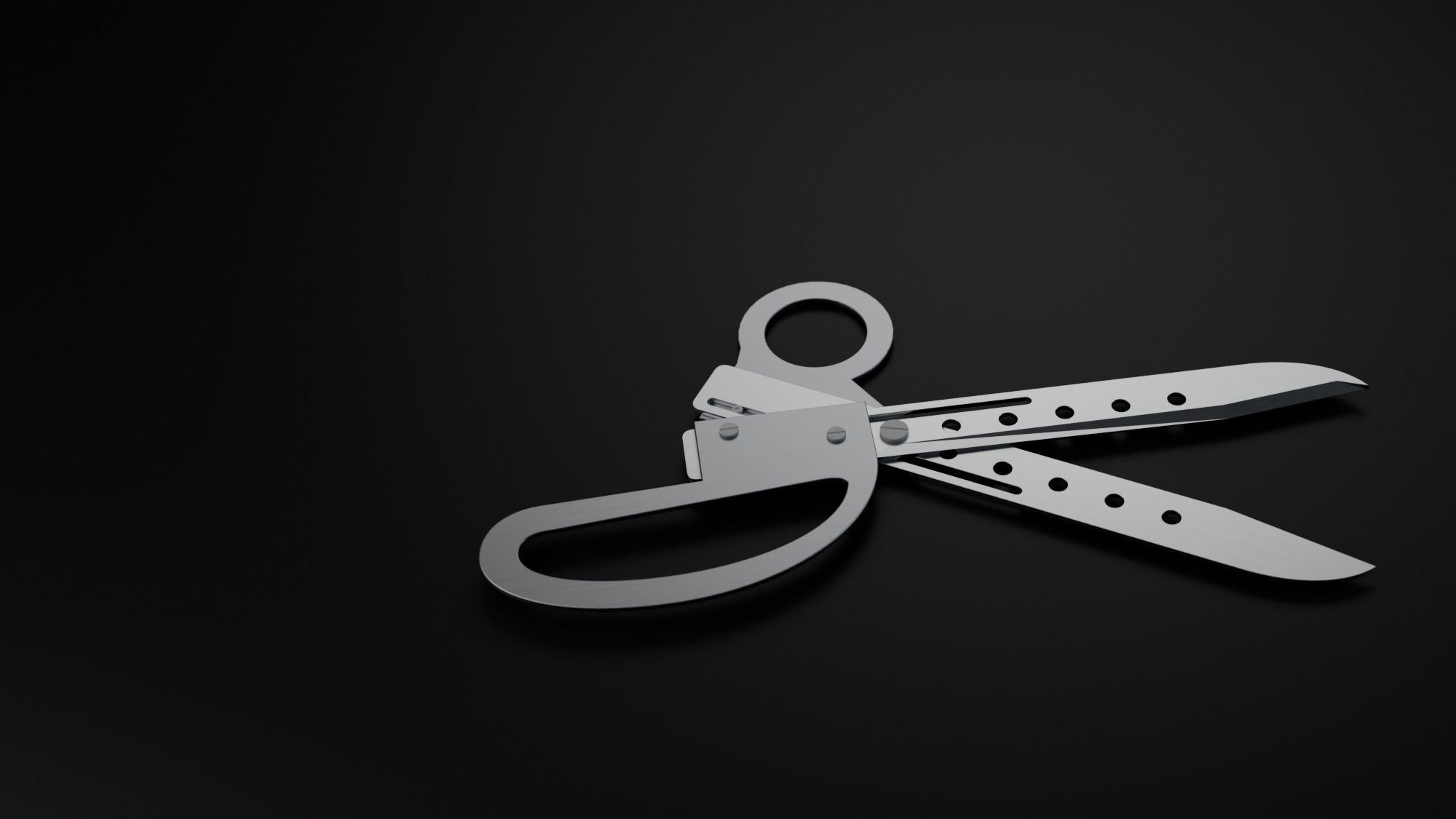
One pair of scissors that becomes small snips, everyday scissors or large shears by moving the pivot along the blades.
Problem
The wrong scissors
Big scissors lose control on detail. Small ones hurt on cardboard.
Insight
It is all the pivot
Small, regular and large scissors differ in one thing: where the pivot sits.
My answer
Let the pivot move
A row of holes on each blade, with handles that slide to follow the pivot.
Result
Three tools in one
Proven in a full-scale print and designed in brushed steel.
Problem
Two everyday frustrations
Huge scissors on a tiny circle: the tips are far from the hand, so small squeezes overshoot. Tiny scissors on thick cardboard: the hand sits close to the pivot, so less force reaches the cut.
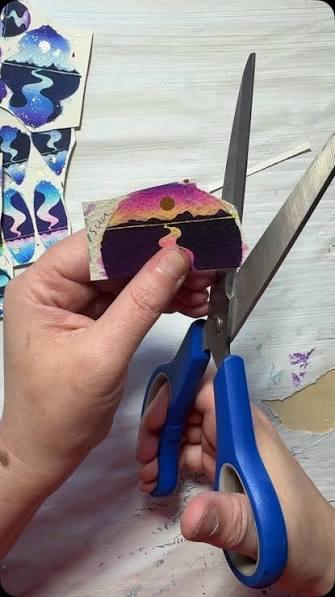
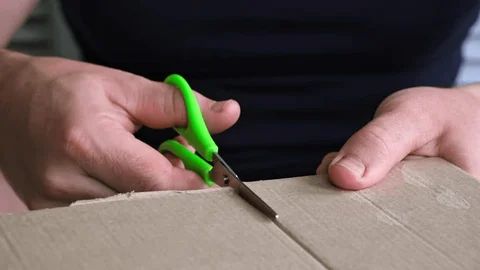
What each one is good at
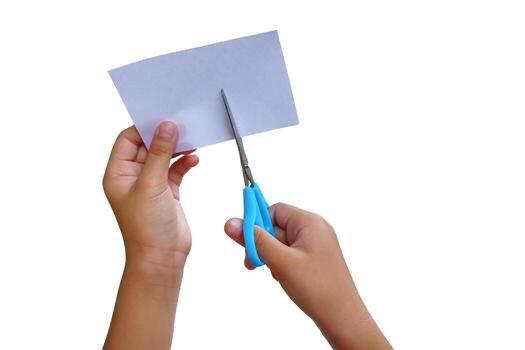
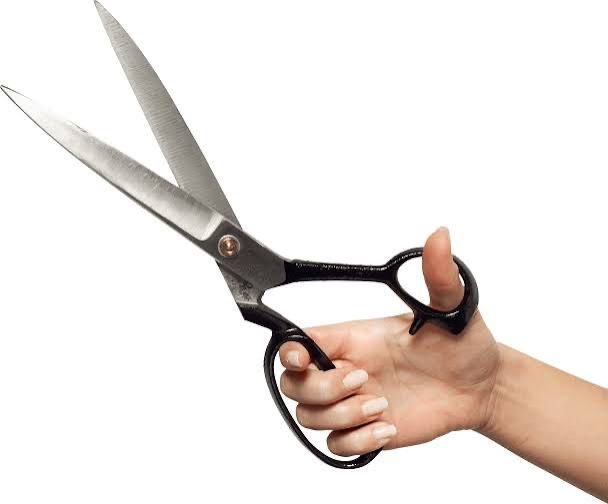
Research
Every scissor has one job
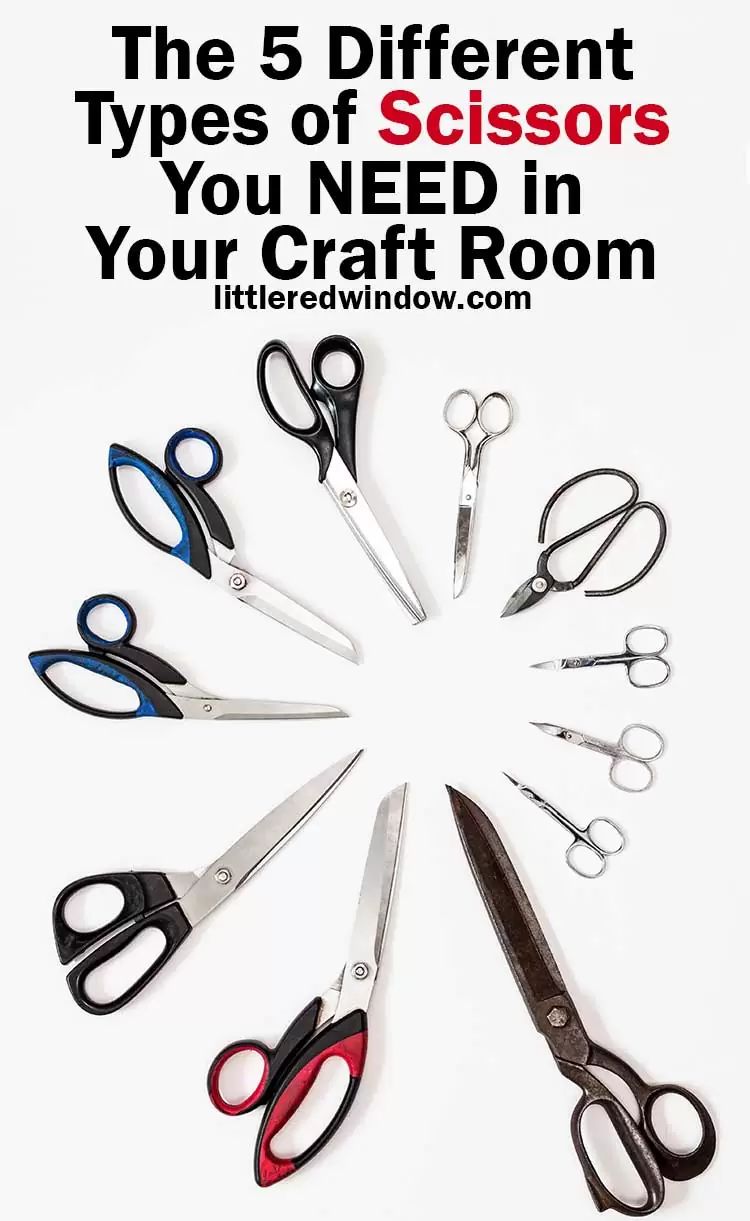
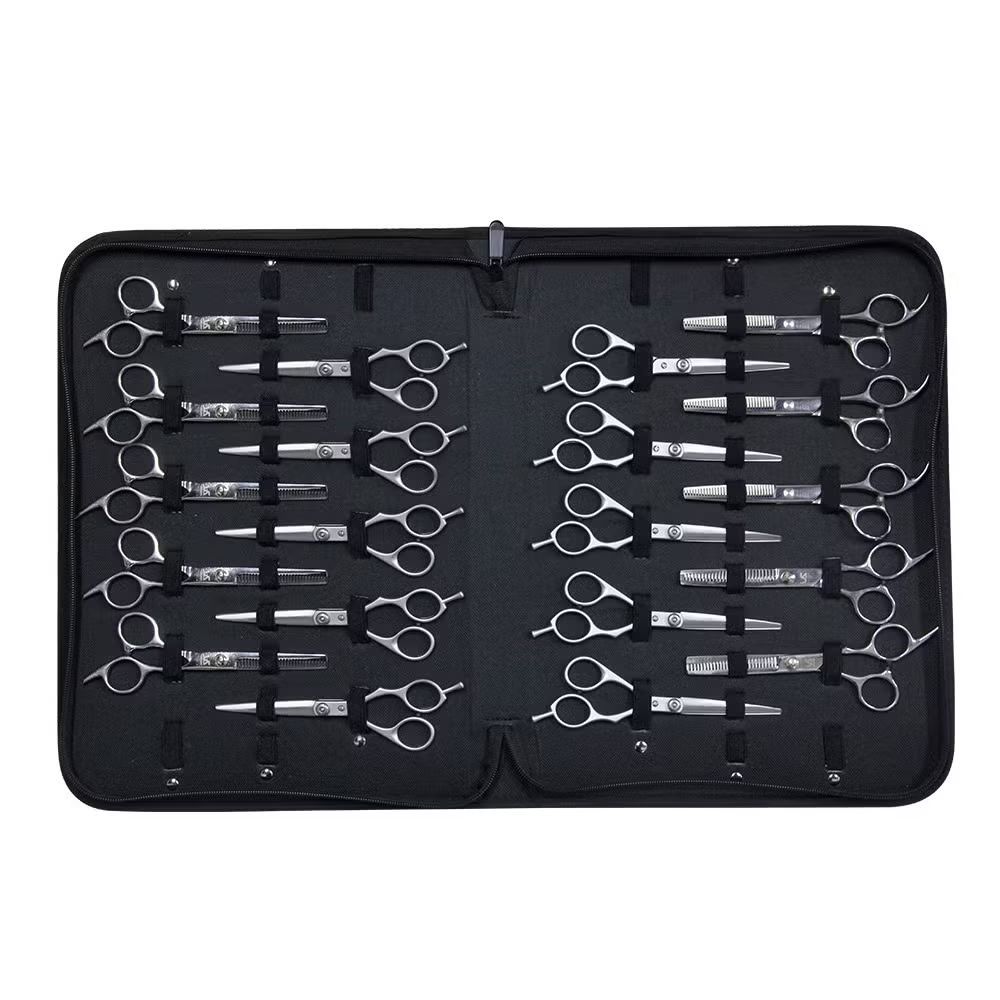
Embroidery snips, craft scissors, kitchen shears, tailor’s shears: each is a fixed answer to two questions, how long is the blade and how much leverage is behind it. Nobody wants to carry a bag of them.
Insight
Where the pivot sits is everything
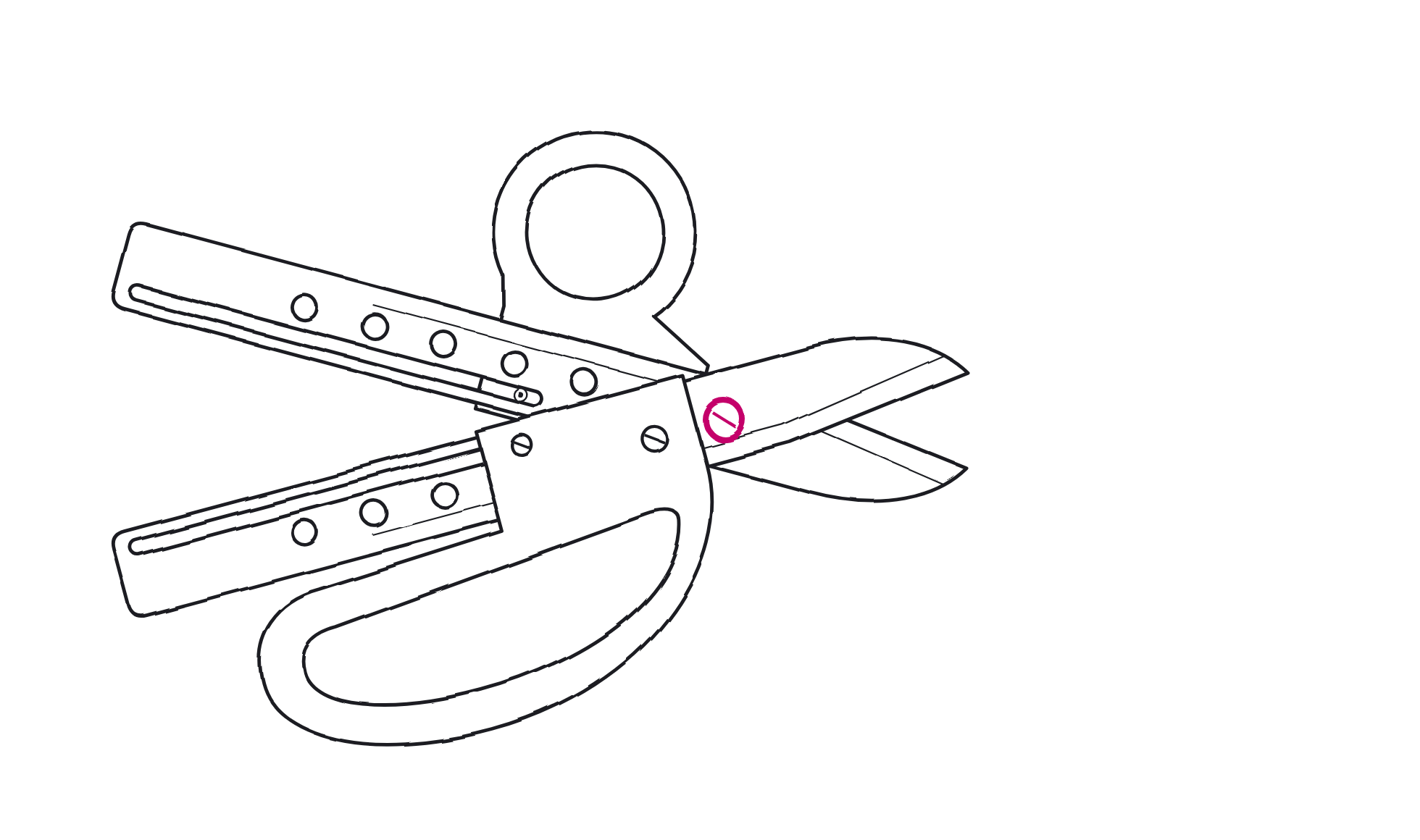
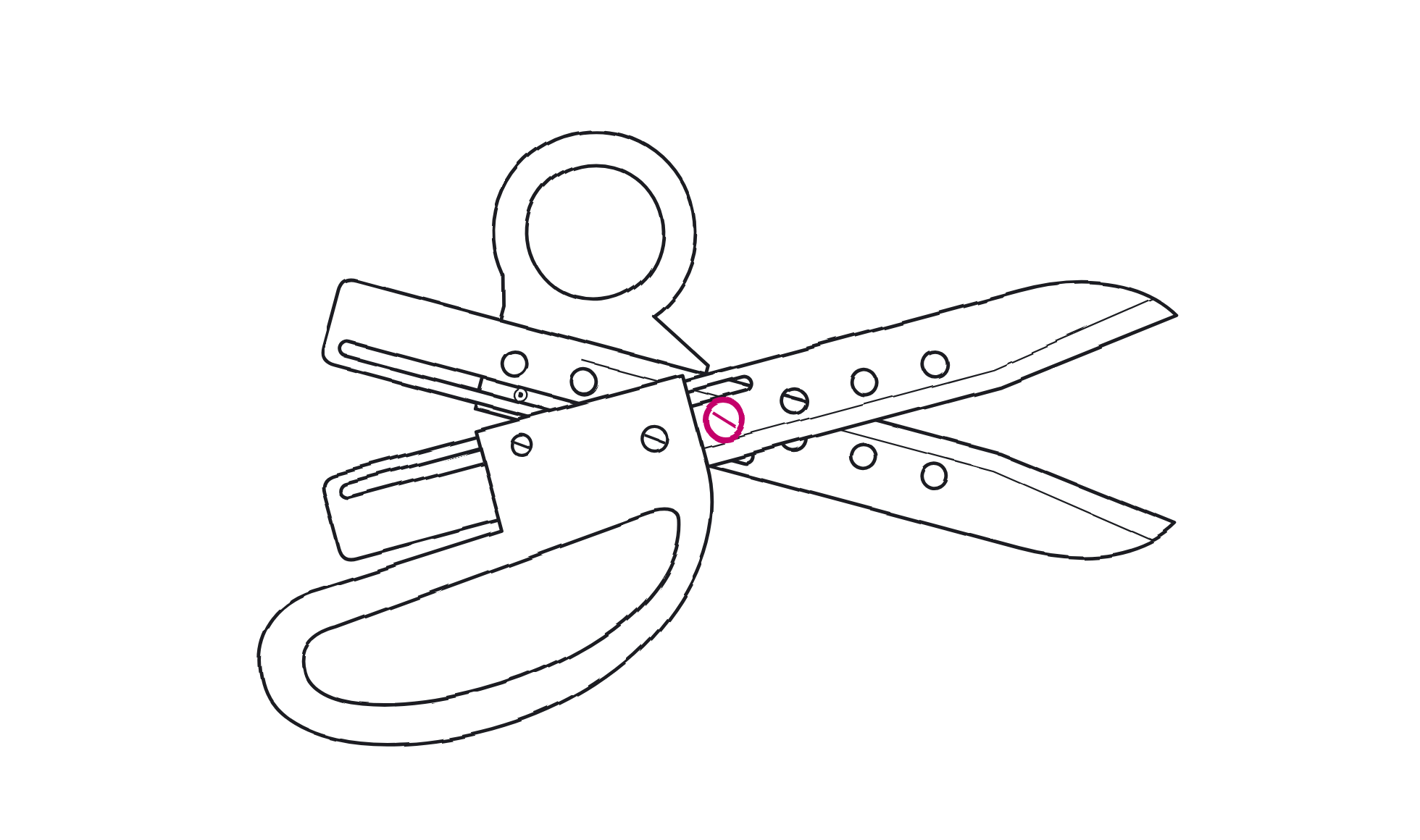
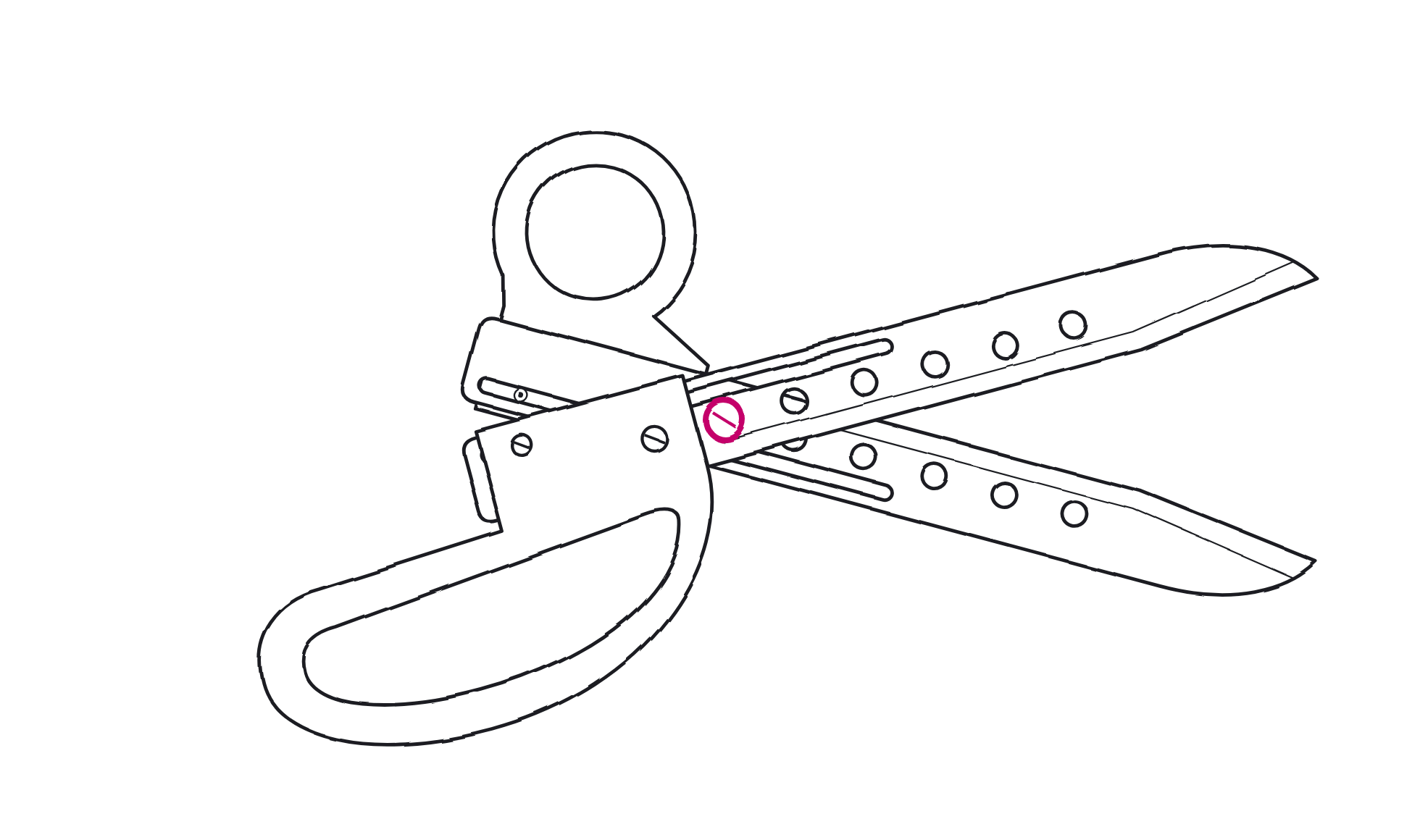
Pivot forward gives short blades for detail. Pivot in the middle is the everyday scissor. Pivot back gives long blades for big cuts. So what if the pivot could move?
Ideas
How do you move a pivot?
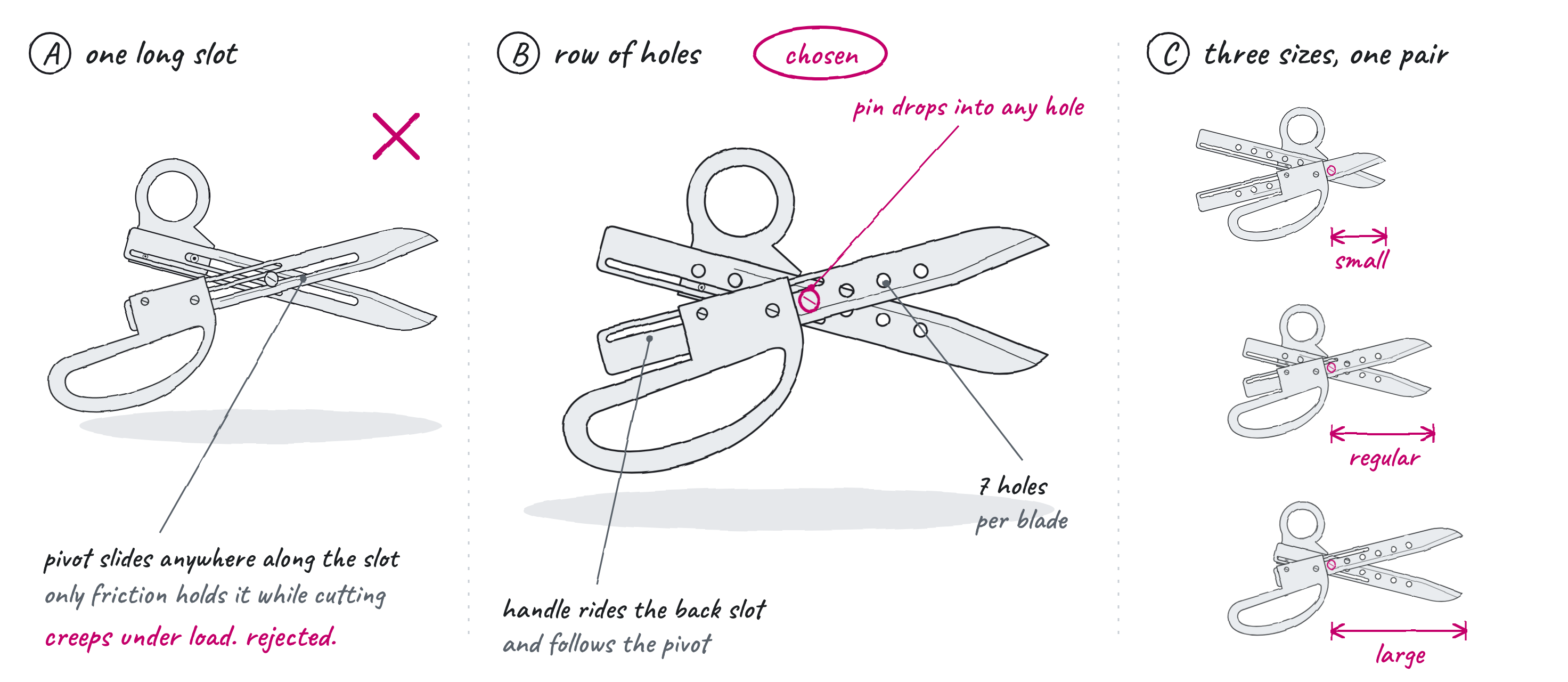
A pivot that slides freely only holds by friction. A row of holes lets the pin drop into a fixed position, while the handle rides a slot to follow it.
One long slot
The pivot slides anywhere, but only friction holds it. It creeps under load.
Row of holes
The pin drops into any of 7 holes per blade; the handle rides the back slot.
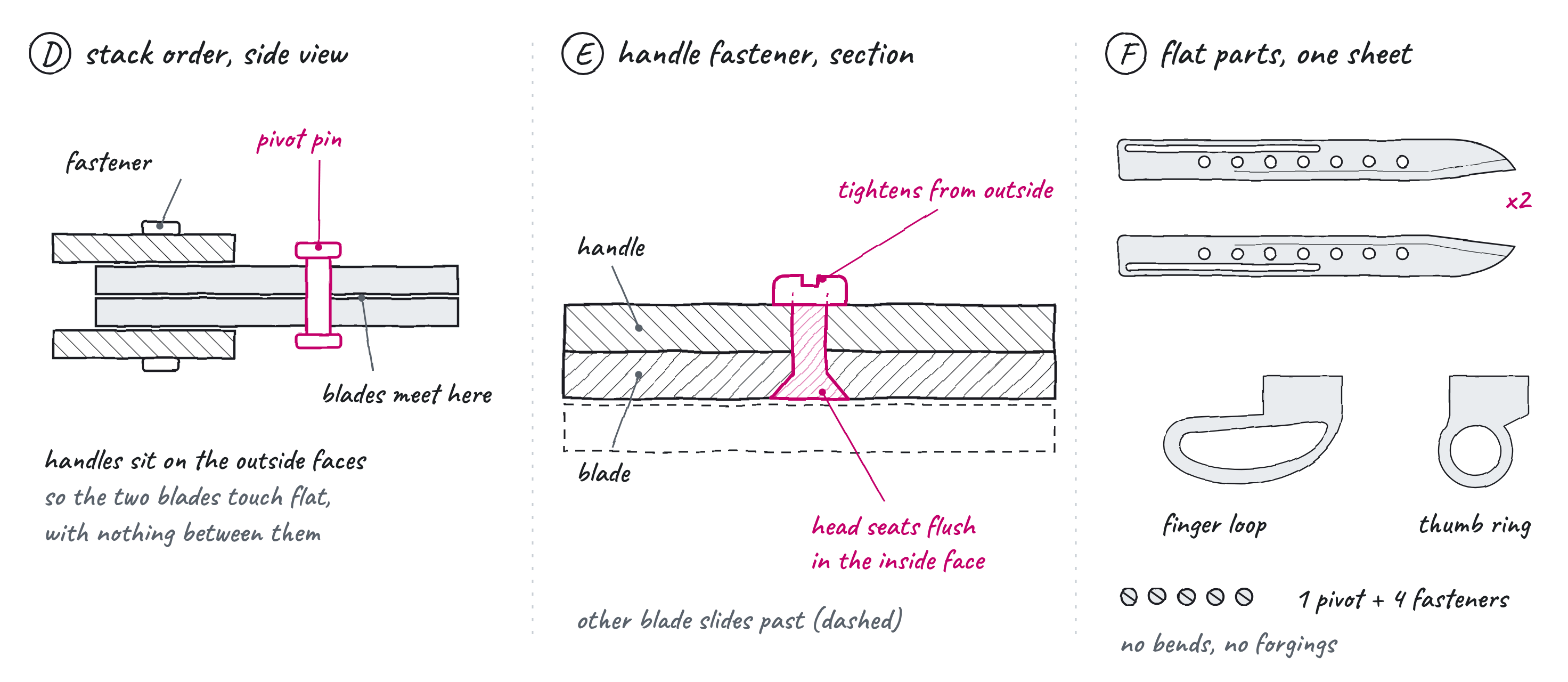
Assembly sketches
CAD
Modelled as sheet metal
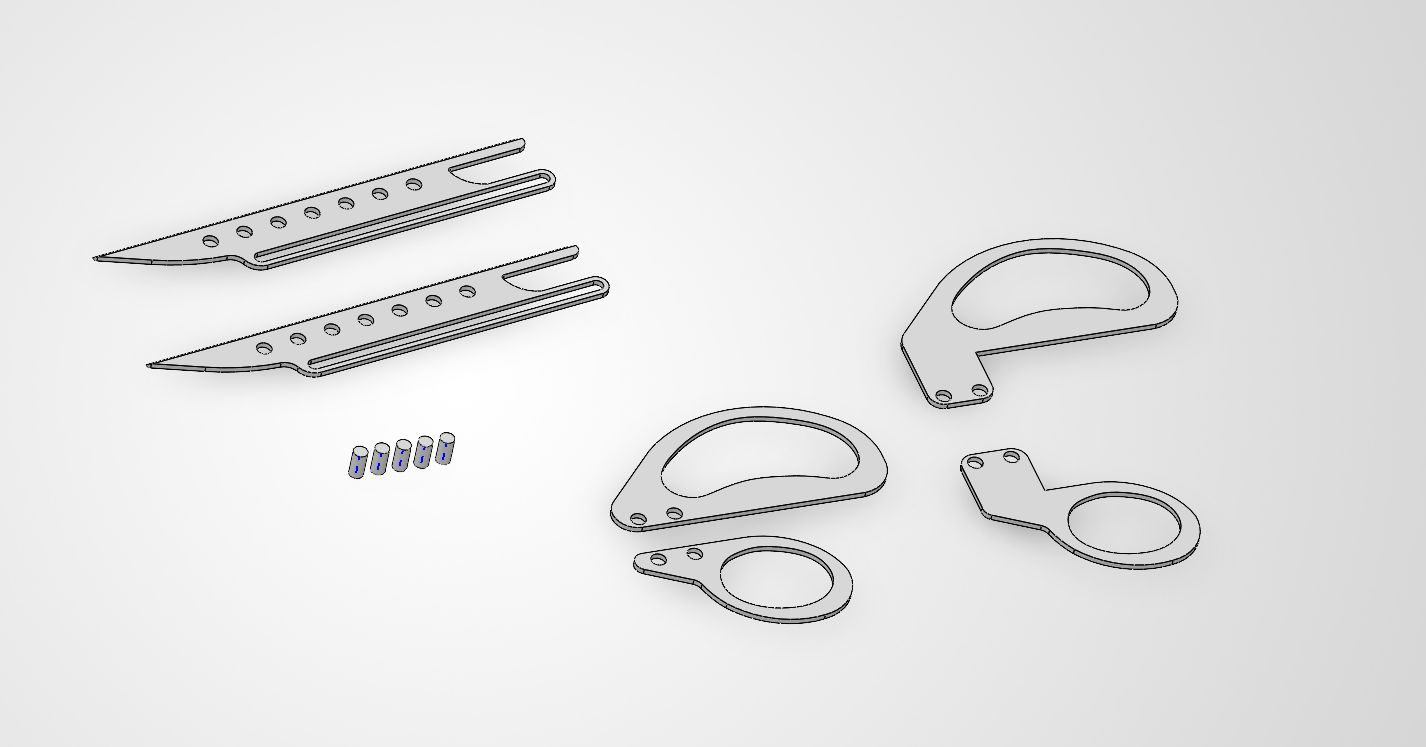
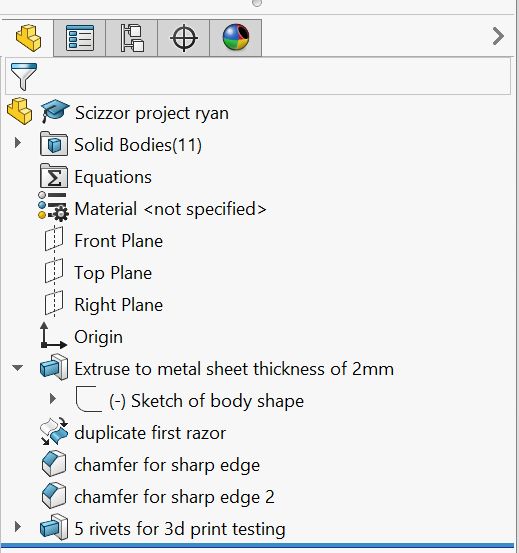
I modelled every part as 2 mm sheet in SolidWorks, so the whole tool can be cut flat: two blades, two handles and five fasteners.
- Sheet thickness
- 2 mm
- Pivot positions
- 7 per blade
- Handle slot
- 1 per blade
- Fasteners
- 1 pivot, 4 handle
- Cutting edge
- Chamfered
Prototype
Printed to prove the mechanism
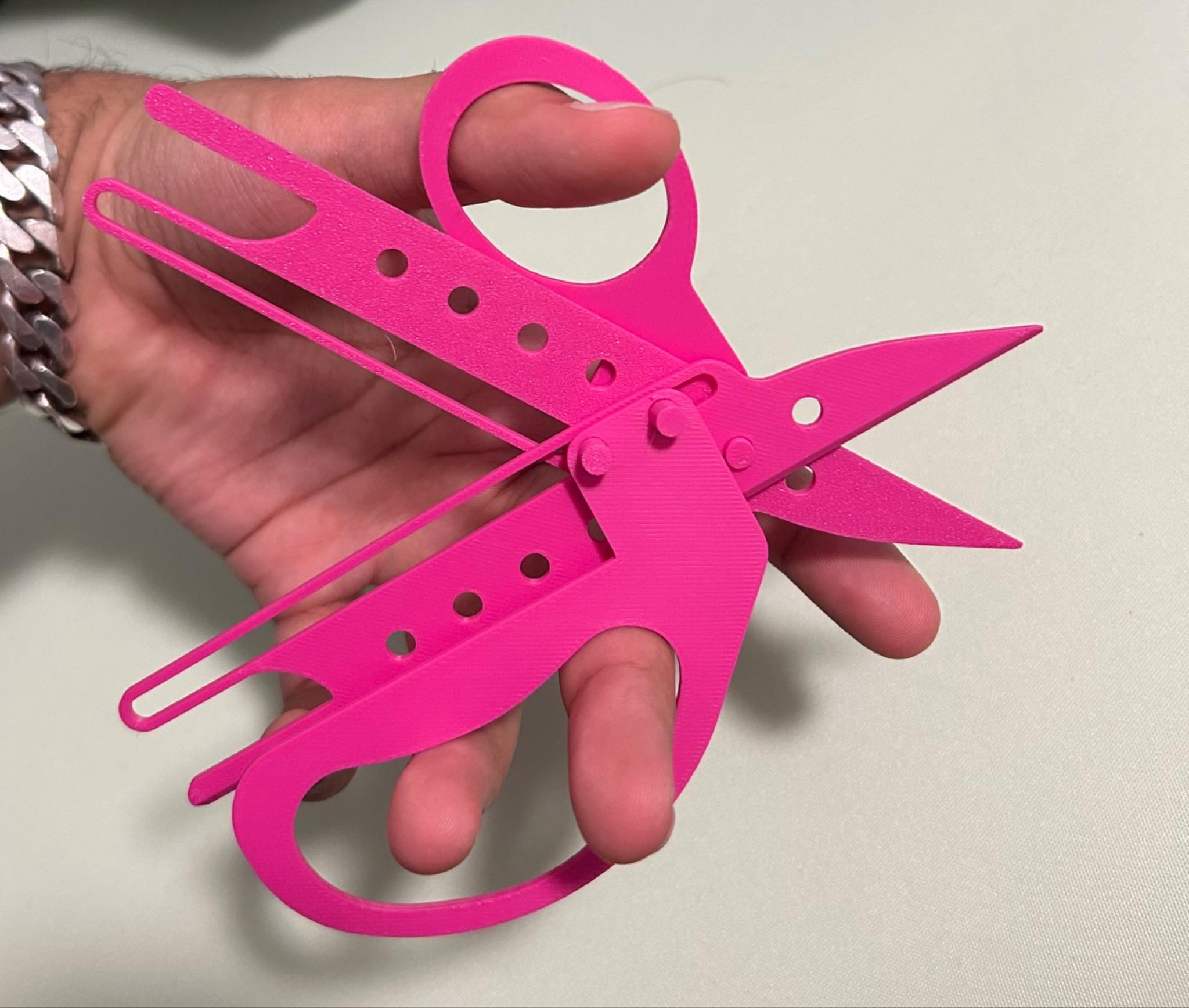
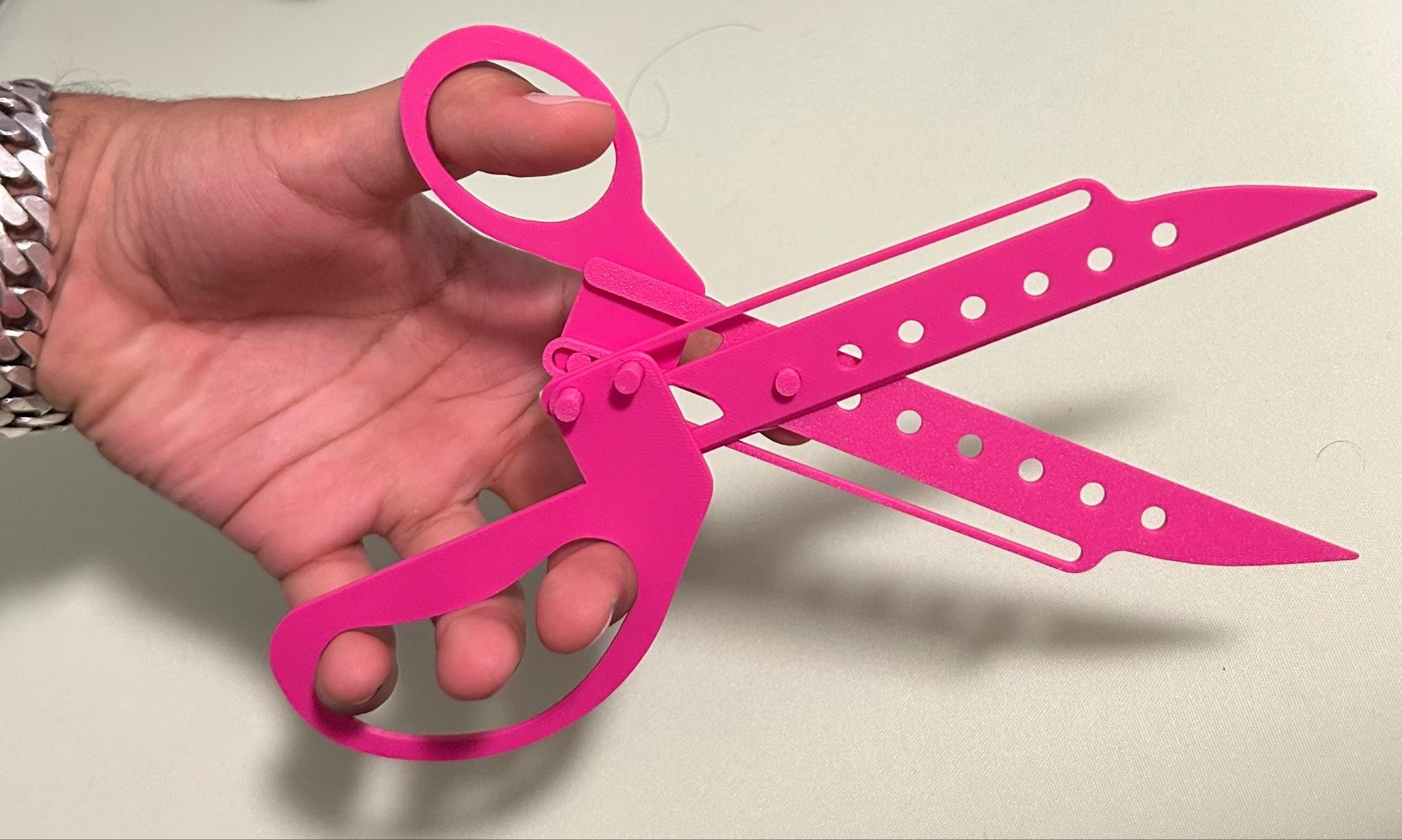
A full-scale PLA print proved it: pivot forward gives short blades and the spare length tucks behind the hand; pivot back gives full-length blades, with the same handles and hand position.
Final design
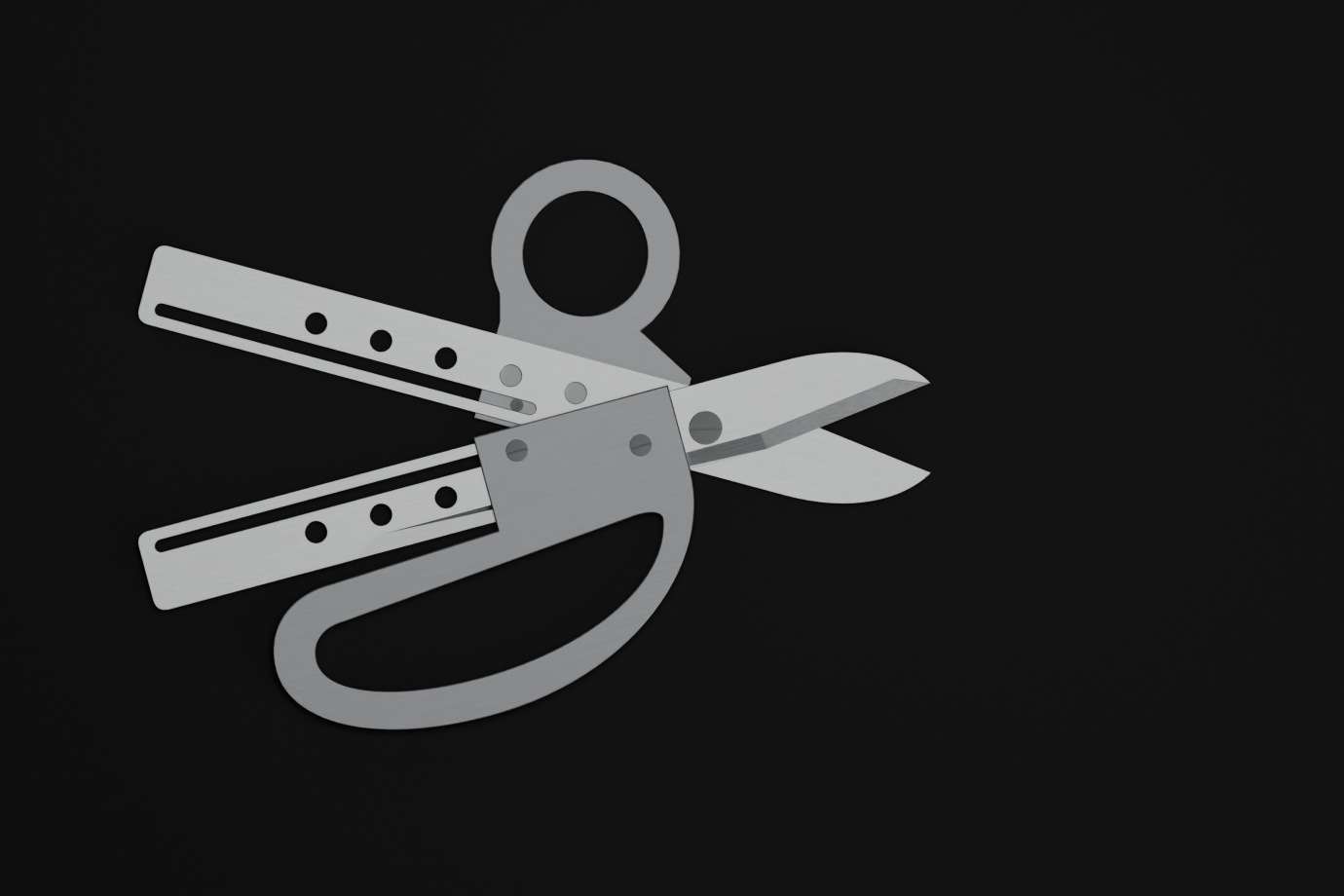
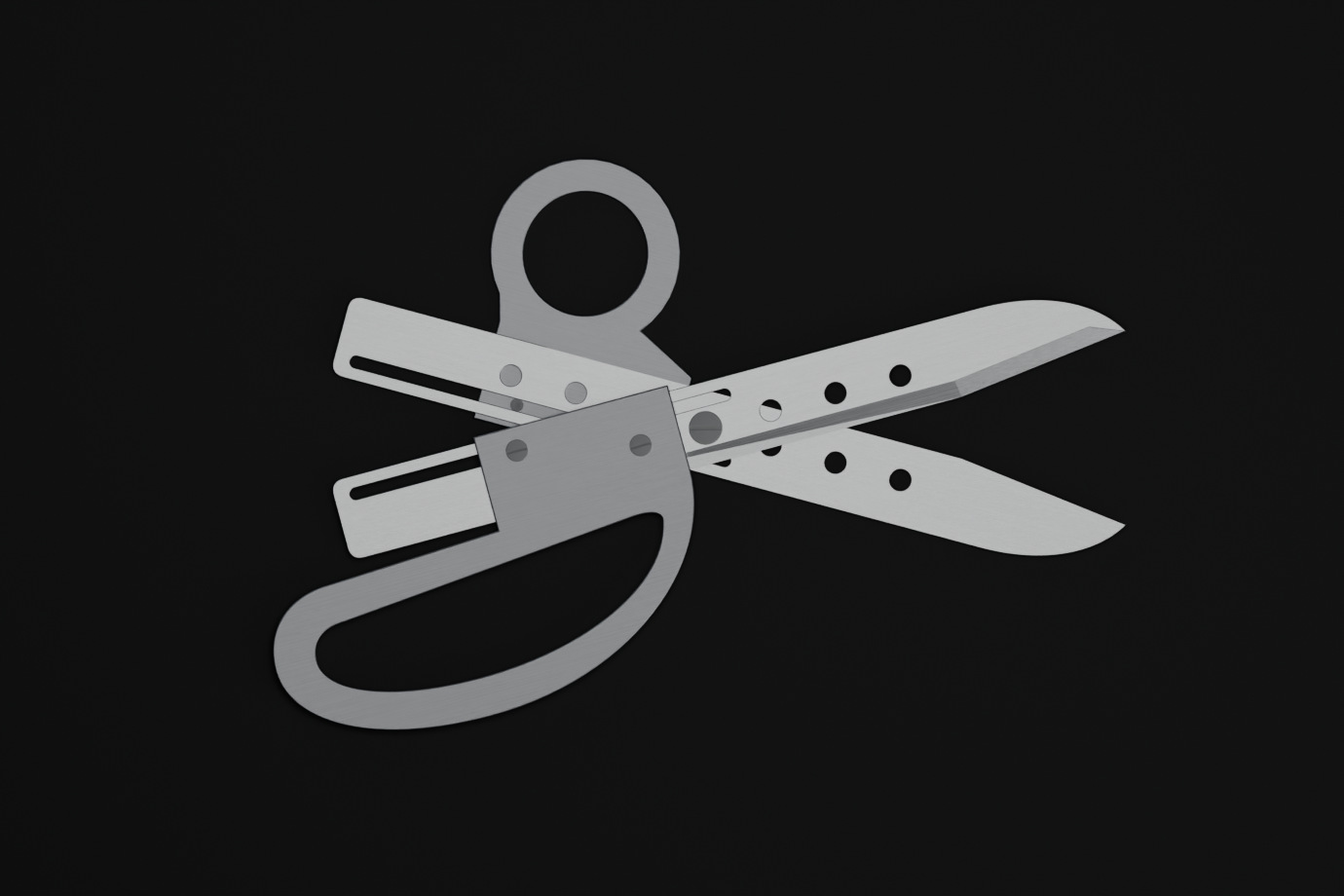
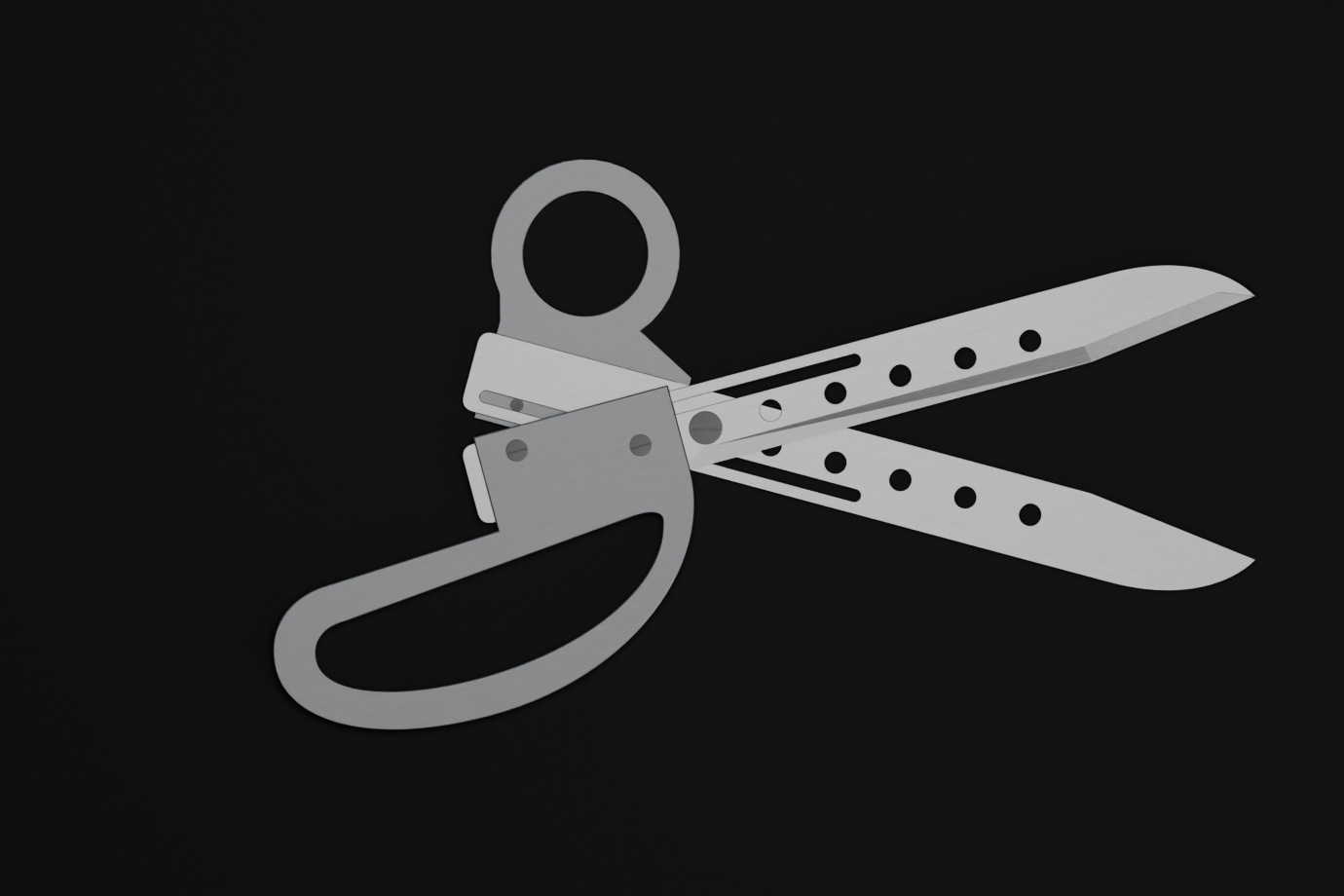
Small, regular and large, in one pair
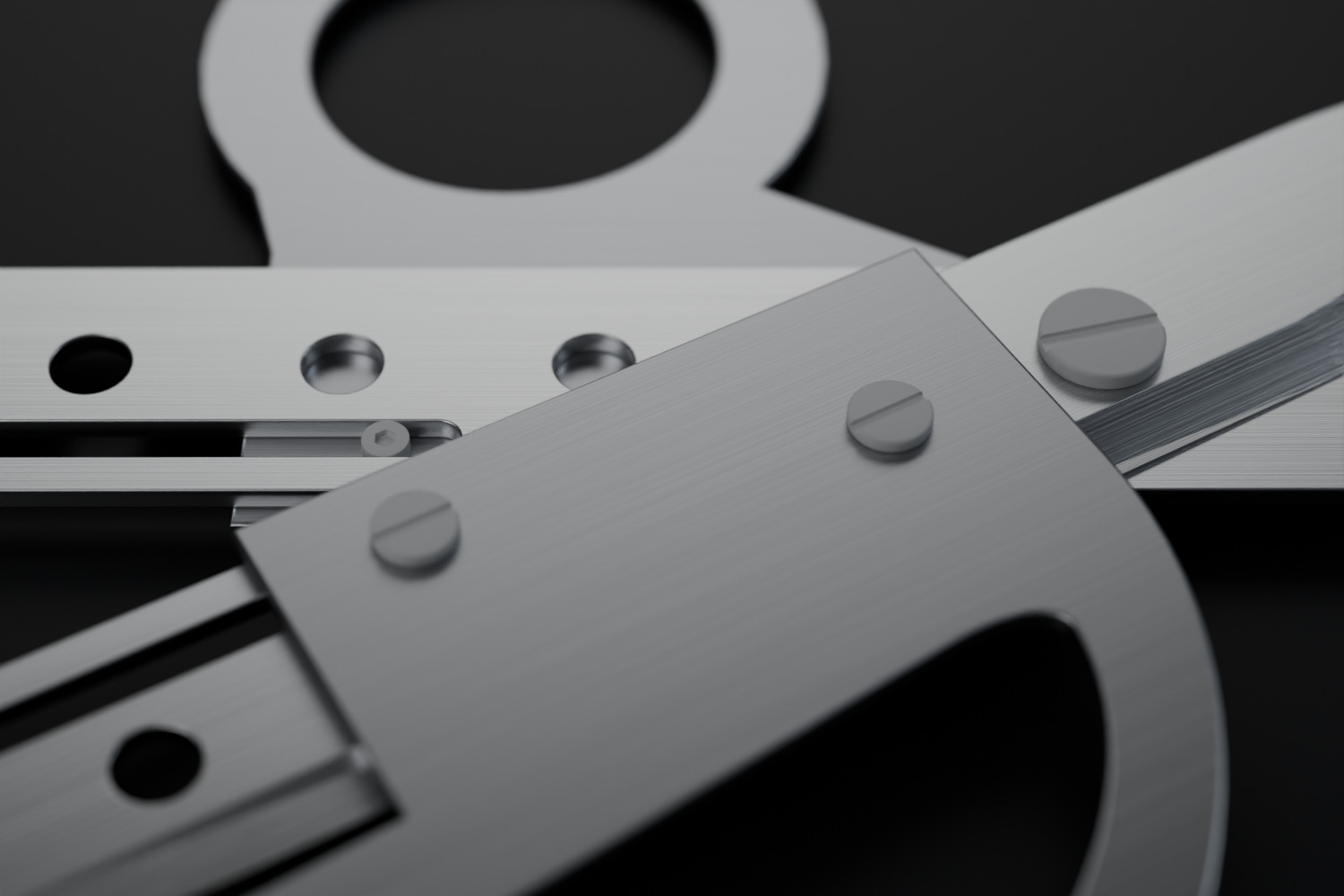
The final direction is brushed stainless blades, riveted, with handle plates that slide along the back slot and flush-head fasteners tightened from outside.
Try it: move the pivot and snip
Handle joint close-up